


Ep. 29: Gina McCarthy – Director, C-Change at Harvard Chan School of Public Health ||
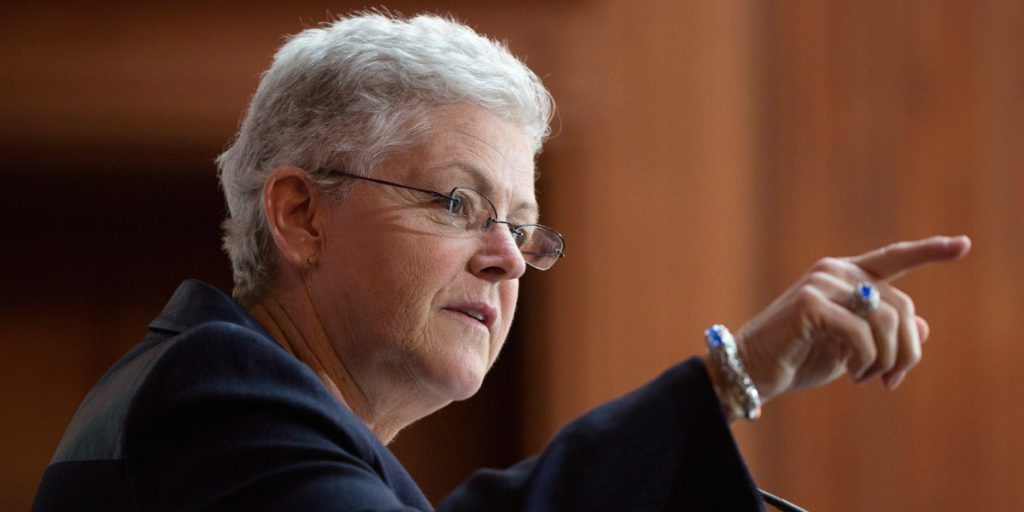
On Sourcing Matters episode 29 we welcome Gina McCarthy, Director of C-Change at Harvard’s Chan School of Public Health. McCarthy has a background fighting for and evolving environmental policy. A change-agent of positivity, McCarthy has been a leading advocate for common sense strategies to protect the public and the environment for more than 30 years. She served under President Barack Obama as the 13th Administrator of the EPA from 2013–2017. Her tenure as EPA Administrator heralded a paradigm shift in national environmental policy, expressly linking it with global public health. Prior, during her career in Massachusetts, McCarthy advised five governors on environmental affairs, worked at the state and local levels on critical environmental and ecological issues, and helped coordinate policies on economic growth, alternative energy, and modern transportation.
.
In our 45 minute conversation we discuss both the need and opportunity to embrace sustainable best practice across the board. We chat about the current landscape in DC. We discuss Scott Pruitt and his $43K soundproof phone booth, Trump’s perspective on the environment, climate change deniers, future food, agriculture and much more.
McCathy’s take on the political divide, “We need to stop Washington from simply making climate change part of a partisan platform. Frankly, It has nothing to do with being a Republican or Democrat. Absolutely nothing! If you’re a human being – you need to care about this, and you need to act.”
To do this we need to motivate, inspire and let people come to their own conclusions that this all matters. “It’s a strategy that we need to stop scaring people, and start creating the pied piper effect. Play great music, and let people follow you.”
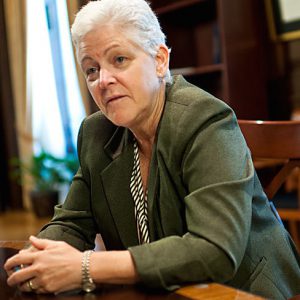 Gina explains that the EPA isn’t a birds & bunnies agency. But, instead one focused on public health and national security. “People need to realize, climate isn’t about polar bears, it’s about their kids.” McCarthy gets to the brass tacks of the movement, “The most important thing we can do is to realize the future is in our hands. We need to grab opportunities where they come, and be positive about it.” She continues “We need to put science to work, and explain it in terms that everyone can understand.” McCarthy recently completed a few fellowships at Harvard. “I found the students to be incredibly exciting and engaging. They had a sense of social justice and equity that was just palpable. They just didn’t want to tolerate moving forward in a world that doesn’t recognize that science is real, that climate change is happening, that manmade emissions are causing it; and that we have to do something – not least of which is to more women into office!”
After her work in DC and finalizing the fellowship programs, Harvard’s Chan school of Public Health became the ideal venue to continue her transformative work in materializing the impacts of climate change and environmental pollution on public & personal health. The goal of the new C-Change center is to make sure science is driving actions continuously. She explains “The Dean wanted the science to be done not just well, but to be communicated well. To actually get into the hands of decision makers, and we can actually make a difference based on real facts on the ground.”
“The greatest opportunity we have to improve health in this century is embrace climate change as a public health issue. Climate change is opening our eyes to what we need to do to live sustainably. And, a low carbon future is something we should be running towards; investing in; talking about; getting exciting about! I want people to know that climate change is perhaps the most direct threat they have today for their kid’s tomorrow. Taking action against climate change now is the greatest opportunity we have to chart a future that is sustainable.”—
Gina McCarthy, Sourcing Matters Aug’18.
@HarvardCChange
 The goal of Commonland is to realize large-scale landscape restoration with local farmers, land-users and experts based on sustainable business cases with each impact being assessed through a matrix monitoring diverse returns that connect natural and economic landscape zones through a multi-stakeholder initiative benefiting all parties. Willem founded Commonland with the idea the long-term commitment is important, as it takes approximately 20 years – or one generation – to restore a landscape. Their holistic restoration approach focuses on the 4 key returns of Inspiration, Social, Natural, Financial. Those returns combine to define a baseline for their long-horizon mission – which is to contribute to a large-scale landscape restoration industry, aligned with international policies and guidelines throughout a shrinking planet.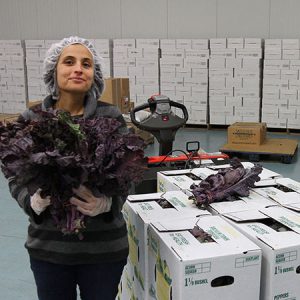
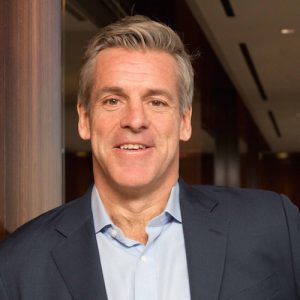 In our 35 minute conversation we discuss a variety of topics throughout the value chain of food, and throughout a circular economy. Warren begins episode by shares interesting anecdotes and details on a few of their portfolio companies. He describes the criteria Bain Double Impact uses to assess and invest in these different companies. Warren also shares how he got into the impact space; how through both personal motivation to improve his wellbeing and to cast a leading light for his family – they’ve defined a tip-of-the-spear approach in private equity which could till new ground for an industry looking to better connect with millennial investors set to inherit $40 trillion in the next decade.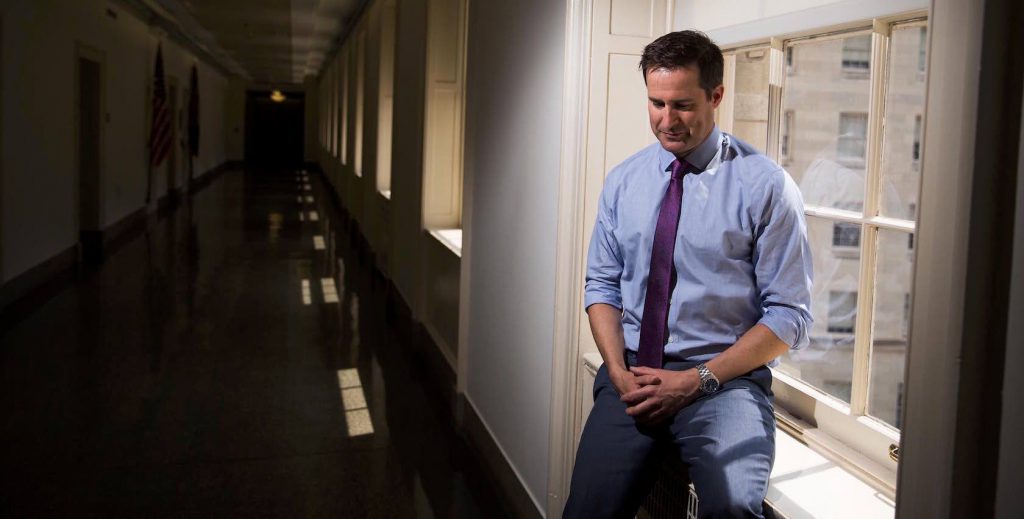
 In our 30 minute conversation we evaluate the capacity of including fisherman and ocean farmers in future US Farm bills. For clarity, 80% of the resources of the proposed 2018 Farm bill will be allocated to SNAP (Supplemental Nutrition Assistance Program) aka. food stamps. This national program of a 1/2 of trillion dollars which arises every five years is in fact our shared domestic food plan, and it drastically under represents our population densities in coastal cities. The inclusion of fisheries & seafood not only adds a voice to the food plan for our largest populations, and guarantees more high-quality food for more in need of SNAP, but it gives our fisherman the same war chest to deal with impending environmental change as we currently employ with many terrestrial food producers. Effectively, we discuss how this pragmatic approach to introduce multiple returns to diverse stakeholders seems realistic under new and future leadership.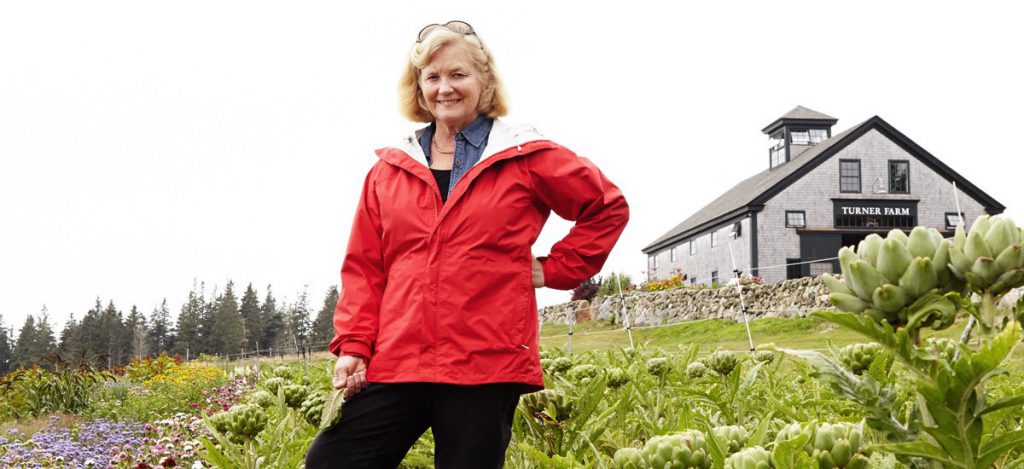
 Truth is, a good portion of our discussion focused on the beautiful State of Maine. Once, and what could again be the fulcrum of the regional food system of the Northeast, Maine has an agricultural linage dating back to the beginning of the Union. 3500 miles of coastline boasting access to a bounty of some of the cleanest waters and seafood in the world. Through this, Maine could cast a long shadow in future bio-regional economies. Pingree embraces systems thinking on her farmstead & Inn in Maine, and in the other House – on The Hill, 600 miles south.
 Producing Châteauneuf-du-Pape style Rhone wines native to the Southeast Corner of France, today we welcome Partner and General Manager of Tablas Creek Winery Jason Haas to Sourcing Matters. Situated squarely between San Francisco & Los Angeles, Jason’s family began their California winery in 1989 using elevated practices that focused on Organic and regenerative in effort to benefit their soils, and the flavor of their wines. Now, producing 360,000 bottles a year of biodynamic and diverse vitas – Tablas Creek has established themselves as a desired brand that engages consumers and progresses the industry through their commitment to producing world-class wine.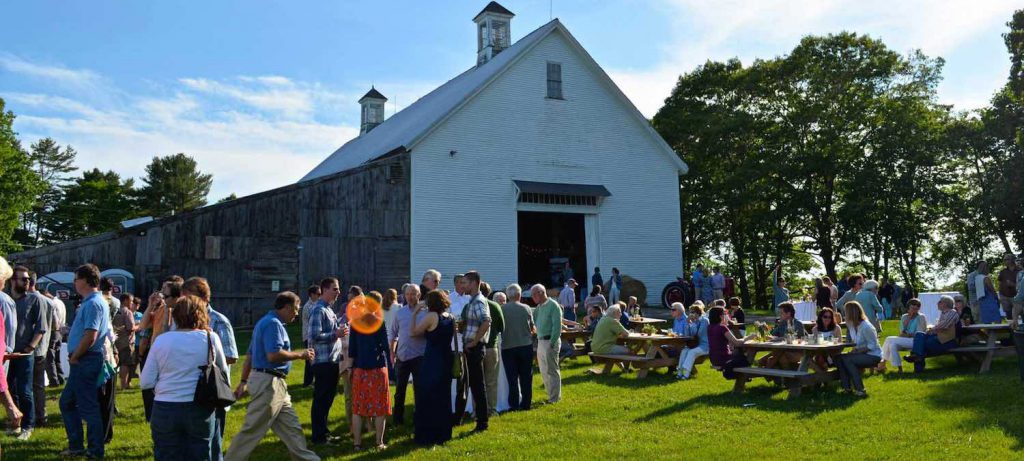
 Joining for episode 22 of Sourcing Matters we welcome Dave Herring: Executive Director at Wolfe’s Neck Center; and Fiona Wilson, Chair of the Board at Wolfe’s Neck, and ED at Center for Social Innovation and Enterprise, Asst. Prof. at UNH’s Paul College of Business.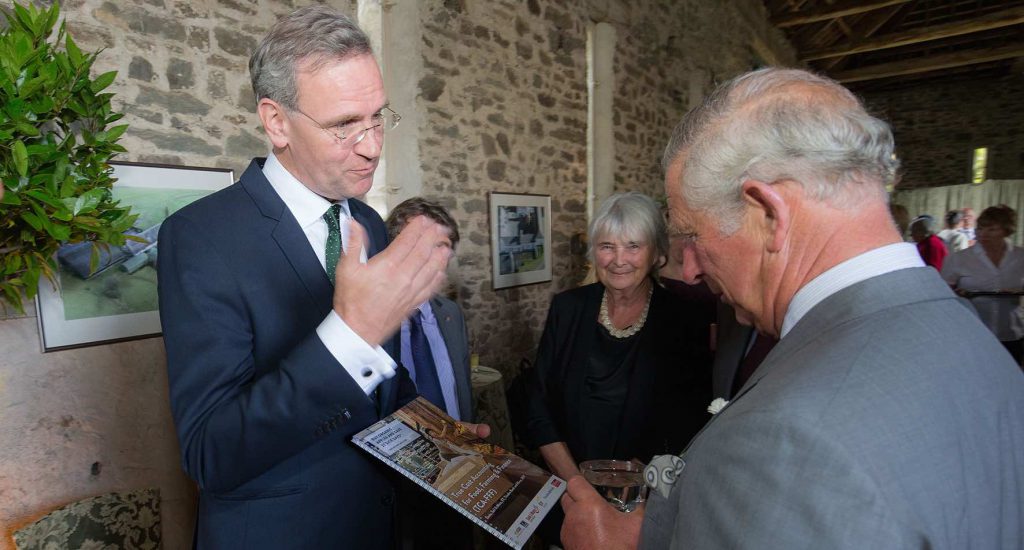
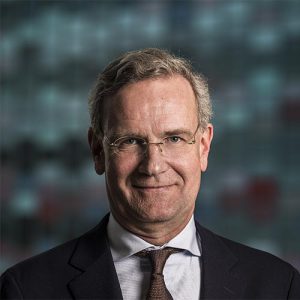 Along with the UN and Ernst & Young – Volkert Engelsman and the team at EOSTA have levered the Nature & More framework to prove healthier & cleaner food has greater value than the cheap stuff. The pilot program has been labeled “True Cost Accounting for Food, Farming & Finance”. We learn that French Government has calculated a 54b Euro impact of externalized costs from contamination on the water supply and environmental impact tied to conventional food production. More over, the UN calculates $2.8 Trillion of environmental externalized costs and $2.1 Trillion in social damage tied to extractive models of agriculture. Engelsman explains that’s about the equivalent of the total revenues of all food products from around the world. “The report makes clear that organic food is not too expensive, but rather conventional food is too cheap.” – details Engelsman.
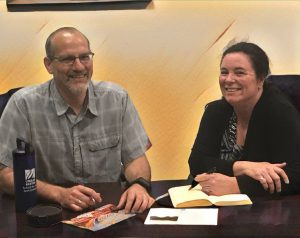 Over 70% of our planet is blue. Unfortunately, these oceans have become a trash receptacle over the past 50 years, and it appears we’re running out of never-never-land to throw-out our growing waste stream. You see, in that same half century time period – human population has skyrocketed from 3.5 billion to 7 billion. Single-use non-biodegradable plastics are now everywhere; even forming its own landmass! And, that’s just the beginning…